Thursday, February 17, 2011

A tribute to ‘El Fenomeno’


Brazil legend Ronaldo - one of the most iconic players to have ever played the beautiful game - brought the curtain down on his glittering career on Monday.

The three-times World Player of the Year - dubbed 'The Phenomenon' when he burst on the scene in spectacular fashion in the mid 90s - currently plays for Corinthians. He was expected to hang up his boots at the end of 2011, but it appears the club's shock early elimination from the Libertadores Cup and his continuing injury problems have led him to call time on his career prematurely.

The news marks the end of a career for a player fans the world over have come to love, respect and revere ever since he exploded onto the scene in 1994.

Since then, Ronaldo Luis Nazario de Lima, to give him his full title, has provided us with some of the most memorable moments of the past two decades with his explosive pace and power combined with his devastating dribbling and deadly finishing making him the most feared No.9 of all-time.

Cast your mind back to that goal for Barcelona against Compostela where he ran from the halfway line leaving six in his path of destruction before finishing with aplomb.

It left the late Sir Bobby Robson with a look of sheer disbelief and wonderment etched on his face and to later remark that it was "the best goal" he had ever witnessed. And who could argue.

Meanwhile, Manchester United fans will especially remember his 'perfect' hat-trick for Real Madrid at Old Trafford during a Champions League encounter where the Brazilian hitman was rightly given a standing ovation as he departed the field in the second half.

And then of course there was his superlative return to form at the 2002 World Cup in Japan and South Korea where his eight goals helped Brazil lift the much coveted trophy for a record fifth time and aslo ensured him the spot as the all-time leading goalscorer in the competition with 15.

Born in Rio de Janeiro, Brazil on 18 September 1976, Ronaldo began his professional career with Cruzeiro, before moving to Dutch side PSV Eindhoven in 1994.

A staggering 54 goals in 57 appearances for the Dutch giants later he moved to Barcelona in 1996 and then Inter Milan 12 months later for a then world record fee of £18million after maintaining his stunning goalscoring form with 47 in just 49 games in Catalunya.

He went on to spend five seasons with the Nerazzurri - of which were largely blighted by two serious knee injuries - before joining the Galacticos of Real Madrid in 2002.

And despite looking a shadow of his former self - the one that transcended how a No.9 should operate - he adapted his game superbly while still remaining the best finisher in the business.

Indeed, 104 goals in 175 games during his time at the Santiago Bernabeu when he was far from the beast that terrorised defences during his earlier, more leaner days, merely reinforces the notion that he truly was a 'phenomenon'.

Perhaps, current Real boss Jose Mourinho the greatest compliment paid to him when he remarked that he was "a better player than Maradona". And to be honest we don't disagree.

Saturday, January 29, 2011

Asian Cup 2011 Comment: West Asia in dire need of rejuvenation


Excuse the pun, but a huge Gulf exists between Arab sides and the rest of Asia.

That was seen at the Asian Cup, where with the exception of hosts Qatar, defending champions Iraq, Iran and Jordan all other teams were comprehensively ousted from the competition after the preliminary group stage.

Three-time Asian champions and 2010 Gulf Cup finalists Saudi Arabia fared the worst among the Arab teams as they were dealt three humiliating losses in Group B.

Just like most countries that fell from their perch of football dominance, West Asian countries have overlooked two very key aspects for continued excellence, coaching consistency and youth development.

Coaching Consistency:

The Saudis deserved the fate that befell them and their haughtiness and pride were handed a severe public flogging. They started their campaign with a shock 2-1 defeat by Syria, which was followed by the sacking of coach Jose Peseiro, who was replaced by Nasser Al Johar, the man the Kingdom turns to in such situations

It wasn’t a surprise that Al Johar would fail in his bid to turn around their fortunes, given he had just three days to work his magic. Al Johar would have tried his best, but the Saudis followed their earlier disappointment going down 1-0 to Jordan and then Al Johar was also shown the door when Japan thrashed them 5-0.

The rest of the Arab nations, Bahrain, Syria, Gulf champions Kuwait and the UAE also crashed out, but their coaches were spared.

The plight of coaches in the Arab world was underlined by what Qatar coach Bruno Metsu had to say after his side qualified for the knockout stage. The hosts lost their opener 2-0, but Metsu remained in the hot seat and as his side bounced back with a 2-0 win over China and that big win over Kuwait, and he dedicated the victory to the Qatar FA for giving him a second chance and showing him some mercy.

Metsu’s comments cast the spotlight on the impatient and result-oriented footballing culture of the region. You win, you remain, you lose and you’re out!

Youth Development:

There was a time that the likes of Iran and Saudi Arabia could pose a challenge, if not defeat these teams but not anymore. The truth is, ever since the retirement of the golden ages of these countries, they have failed to invest in youth development, instead resorting to managerial shake-ups in the hope of restoring past glory days.

It speaks volume about the ignorance with regards to youth development in the region when Saudi Arabia’s last appearance in the final of the AFC U-19 Championships was in 1992 and Iran’s was back in 1976. Contrastingly, the last decade of the competition's history has been dominated by South Korean and Japan.

Iran, Saudi Arabia, Qatar and the UAE may have raised their domestic league standard in recent years, but the “money can buy everything” mentality in Middle East has overshadowed all the other necessary investments in professional football.

There are thousands of young players lining up for few minutes of reserve team football in these countries, while ageing local, European and African stars on outrageous salaries are picked ahead of them. As long as the quick-fix mentality of clubs and national team officials is preferred to long-term investment in local young talents, things will only get worse in West Asian football.

As we have seen the golden generation of any national team will eventually have to hang up its boots, to be succeeded by the younger generation. It’s at this point that disaster usually strikes given the failure to discover and develop local talent, as was the case for Saudi Arabia this time around.

It is both amusing and sad that the beleaguered officials from these national federations rush to repeat the same mistakes over and over again. All blame is once again directed towards the managers.

The Middle East suffers from its dated approach, whereas adaptation to change and constant improvement of the fundamentals is the backbone of managerial culture further east.

If the gulf between the East and the West, the North and South in Asia has to be bridged, it is important for federations here to disband their hire and fire policies and adopt a more patient approach, one that looks into the future and considers the long-term goals of each nation.

Football is a progression, you reap what you sow and sometimes patience is key. When the final is played out on January 29, the side that lifts the trophy will demonstrate just that!

Saturday, January 22, 2011

Are January Transfers Value for Money?


For normal folk, window shopping costs nothing; it is spending in the mind, while the January sales are an opportunity to hunt for bargains. But in the looking-glass world of football the January transfer window finds clubs paying inflated prices for players they may or may not really need. On balance the sellers tend to end up better off than the buyers.

The window was introduced by Fifa in 2003 following negotiations with the European Commission over the labour laws. A similar system was already being used by a number of European leagues, although in England the window replaced the previous deadline, usually the third Thursday in March, and some still mourn its passing.

Steve Coppell has called for the New Year window to be scrapped, saying that it leads to panic buying. "I cannot see the logic in a transfer window," he argues. "It brings on a fire-sale mentality, causes unrest via the media and means clubs buy too many players. The old system, where if you had a problem you could make short-term purchases, was far better than the system we have at present."

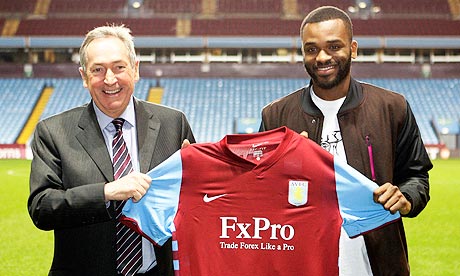
Steve Bruce may be inclined to agree. In the middle of a successful season, with his Sunderland team pushing for a place in Europe, he has suddenly lost Darren Bent, his leading scorer, to Aston Villa. Not so long ago anyone offering £18m for Bent would have had his hand bitten off at the elbow, but goals alter cases.

The Midlands club may end up paying £24m for the striker, which would bring the total amount spent on him by Charlton, Tottenham, Sunderland and now Villa to £53m, making Bent the costliest British player.

Not the most valuable, of course, bearing in mind that Ryan Giggs and Paul Scholes cost Manchester United nothing but the money spent on bringing them through the youth academy, and have long since been beyond price in their worth to Old Trafford.

For Villa, spending that much on Bent looks like a panic buy. Martin O'Neill's sudden resignation at the start of the season was put down to a difference of opinion with Randy Lerner over the Villa owner's sell-to-buy policy. O'Neill was promising to take the team into the Champions League but under his successor, Gérard Houllier, Villa are now in a serious struggle to avoid dropping into the Championship. So they end up paying out more for Bent than O'Neill would probably have wanted to spend last summer.

At least Bent should prove a happier signing for Villa than an earlier January buy, Eric Djemba-Djemba, who having already underwhelmed Manchester United after Sir Alex Ferguson signed him from Nantes was offloaded on deadline day at the start of 2005 and spent most of his time on the bench. Such was the fate of Scott Parker, for whom Chelsea paid Charlton £10m a year earlier. Parker's career stalled at Stamford Bridge although he would probably get a better run in Carlo Ancelotti's midfield now.

Not every January signing is a flop. Newcastle may still wince at the memory of Jean-Alain Boumsong, an early candidate for the sale of the 21st century when he left Rangers for £8m six new years ago but another defender, Michael Dawson, who joined Tottenham from Nottingham Forest at round about the same time in an £8m deal which also involved Andy Reid, looks a better bargain by the season.

Similarly Matthew Upson, who moved from Birmingham to West Ham in the 2007 window, has been good value for his £7.5m fee although not quite the snip that Gary Cahill, now an Arsenal target, has turned out to be at the back for Bolton, who signed him from Villa for £4.5m at the beginning of 2008.

Unless Bent proves otherwise, the best sell of the January windows so far is arguably Craig Bellamy's departure from West Ham to Manchester City for £14m in 2009 while the shrewdest buy is surely Dean Ashton's £7m move from Norwich City to Upton Park in 2006, which did much to help Alan Pardew's side reach the FA Cup final.

This week, incidentally, marked the 50th anniversary of the day the £20-a-week maximum wage was abolished in the Football League. Up to now Aston Villa have had a slightly more generous weekly wage ceiling of £65,000 but Bent's salary is set to go through the roof. And he experienced fewer problems getting away from Sunderland than George Eastham did with Newcastle.

Bent just went.

Wednesday, January 19, 2011

Real Madrid’s Striker Woes: Top 5 Signing Possibilities


During Real Madrid’s game on Jan. 16 against Almeria, one crucial point was highlighted: Real Madrid sorely lacks a confident striker. As obvious as this reality now is, it is not obvious what the best next step is for the club.

This, however, was not always the case. When the season began, the forward and striker positions were not a source of major concern. The way Jose Mourinho likes to play, he only uses one striker; this is a 4-5-1 (or 4-2-3-1) formation. Gonzalo Higuian was the sole proven striker up top and a favorite of Jose Mourinho. Just in case, Karim Benzema was ready on the bench and could be used when necessary.

Everything went terribly wrong, however, in early December when Higuian injured his back requiring surgery, and he is now out for the rest of the season. Benzema has stepped into Higuians role but has failed to provide for Mourinho, scoring only one goal in La Liga.

Mourinho’s frustrations came to a boil on Sunday’s game against Almeria when he decided to play Cristiano Ronaldo, who is a preferred winger, as the sole striker instead of Benzema. Benzema, although he is a great striker when confident, has lost all of his confidence as of recent and I don’t think he will get that back as long as Mourinho publicly doubts him. The formation in Sunday’s game could have been considered a 4-6 formation. Ronaldo was hesitant and not accustomed to hovering in the box. He consistently dropped back to a midfield position. Simply put, Ronaldo is not the answer to Real Madrid’s striker dilemma.

Real Madrid management finally agree that something should be done about the striker position if they want to have any chance of catching up to League leaders Barcelona. There is a search for a new signing, but who should it be? Here are my top five signings for the January transfer window:

Emmanuel Adebayor (Manchester City)

This is definitely an option when looking around Europe for a proven centre forward who can leave in the middle of the season. Adebayor is out of favour at Manchester City and is unlikely to break back into the first team, especially now that Dzeko has recently joined the team. Adebayor is not happy on the bench and looking for a way out; however, he is highly valued in the transfer market.

It is unclear whether Real Madrid will be willing to pay a lot of money for a player like Adebayor this transfer window; Florentino Perez has largely zipped up his purse. If there is a signing, I think it will have to be at a price well below Adebayor. Although Adebayor is a talented centre forward, he has not had a great season for about two or three years, and he has been out of first team play for many months now. Simply put, he is still an option, but not worth the money.

Carlos Tevez (Manchester City)

What is interesting about this prospect is that part of it has already played out. Real Madrid has already offered Manchester City 33 million pounds for Carlos Tevez. Roberto Mancini will be desperate to hold onto his leading goal scorer, as Manchester City are desperate for goals while trying to fight for a Champions League spot or even the title.

It is unlikely that Tevez will end up in Madrid, but it is certainly possible. City may be desperate for cash after the huge signing of Edin Dzeko. And if Dzeko performs, City could cash in on Tevez, although again, I see this as an unlikely and fruitless effort on the behalf of Real Madrid.

Raul Gonzalez (Schalke)

Raul is no stranger to Real Madrid. He spent 16 successful seasons in the Real Madrid first team. He left in 2010 and joined Schalke 04 in the Bundesliga. In the first half of this season he has already proven his scoring ability by netting nine goals in 17 appearances.

Although Raul has already left, he could make a huge impact back at Madrid. He has a great goal scoring ability and is most comfortable in the box and at finishing, exactly what Madrid need. If pursued heavily, Mourinho may be able to pry him away from Schalke; however, it is unlikely that he will pursue Raul to great enough lengths. A good option nonetheless.

Miroslav Klose (Bayern Munich)

This is a great option that has already gotten much attention in football media. Real Madrid are interested in Miroslav Klose. I think it is a good and safe option.

Although Miroslav Klose's age and lack of playing time at Bayern are a concern, he still has something to offer. And for Madrid they may need to settle for a consistent scorer like Klose even if he is nearing the end of his career. Klose has scored 14 goals in three World Cups for Germany and four at the most recent tournaments in South Africa.

Klose is proven and consistent. Although he is not a flashy nor extremely technical striker, he is a gifted finisher. His intelligent positioning and great arial ability have scored him countless goals throughout his career: 58 goals in 102 appearances for Germany. These traits would be especially appreciated at Madrid.

Ruud Van Nistelrooy (Hamburg)

Ruud Van Nistelrooy is undoubtedly one of the most prolific strikers of all time. His ruthless goal scoring appetite and his 'coolness' in front of goal puts him up there with the best. He is the ideal center forward. His positioning is superb and his finishing ability with his head and both feet is both highly technical and effective. His numbers speak for themselves: 95 goals in 150 appearances for Manchester United and 46 goals in 68 appearances for Real Madrid and finally 11 goals in 26 appearances for Hamburg.

Van Nistelrooy left Real Madrid in January 2010, but he is everything Madrid needs to fill the void of Gonzalo Higuian. His style does not require great pace and his goal-scoring instinct does not disappear with a bit of age. Although like Klose and Raul, Van Nistelrooy is nearing his professional retirement he can still score very important goals for Real Madrid. Van Nistelrooy is a proven goal-scorer under pressure and has the experience Madrid needs to enter the squad in the middle of the season.

His club in Germany, Hamburg are desperate to keep the Dutchman, however. He is a much needed asset in a team struggling in the middle of the Bundesliga tables. However, if Mourinho shows he is willing to pursue Van Nistelrooy, the transfer could work out. Ruud has already said to the press that he would love to return to Madrid on loan and he is confident on his ability to score goals.

I think Ruud has at least half a season left in him, given not much else. Here is a video to remind you of what he can do for Real Madrid: http://www.youtube.com/watch?v=8sQAWSf4mGc&feature=related

Tuesday, January 18, 2011

Previewing and predicting the 2011 women's Australian Open

Tournament Preview:

There comes a time where every top player has to prove their worth. A time where the naysayers need to be silenced, and a player’s legacy can deservedly be edged in stone. For world No. 1 Caroline Wozniacki, that time appears to be now-or-never. Grinding her way to the top spot in the rankings, the Danish firecracker has yet the reach the finals of a Major event.

Adding to the concerns of the current top seed, she recently changed racket companies to begin the season, and while that normally wouldn’t be the greatest issue for a player, her new Yonex stick is a completely different head shape from her previous Babolat model.

Keeping that in mind, Wozniacki remains the ring leader in a hungry field of a 128 women. In the absence of defending champ Serena Williams, No. 2 seed Vera Zvonareva, No. 3 seed Kim Clijsters and No. 4 seed Venus Williams will attempt to pick up the slack of the five-time former winner.

Although she’ll be ranked No. 11 at the event, Justine Henin could be the most dangerous player in the draw. Apart from the confidence and experience of Clijsters, Henin remains the most adept hard-court player in the tournament.

In stark contrast to the top heavy dominated game on the men’s circuit, the competition on the WTA remains wide open and full of great opportunity.

With seven Grand Slam winners in the draw, let’s now take a look at the top four seeds and their path’s to a possible semifinal appearance.

First quarter

This isn't what top-seeded Caroline Wozniacki needed. Already struggling early this year, she could have used an easy match against a low-ranked opponent to get settled in Melbourne. Instead she gets a veteran in Gisela Dulko. If the 20-year-old survives, maybe defeating Dulko will give her a jolt of confidence. Unfortunately for her, it doesn't get much easier from there, with Dominika Cibulkova, Jarmila Groth, Yanina Wickmayer and Marion Bartoli rounding out the field.

The bottom half has so many question marks the matches should be played at The Riddler's tennis court. Can Justine Henin get back on track? Can Francesca Schiavone defend her seed? Will we see the Svetlana Kuznetsova who made it to at least the quarters in six of nine Grand Slams from 2007-2009 or the one who failed to make it past the fourth round in any of last year's majors? And can Bethanie Mattek-Sands make some noise in her first Australian Open? (Is it really her first?)

Semifinalist: Cibulkova

Second quarter

For the first time in a few majors, Maria Sharapova isn't thought of as a dark horse candidate to win the title. Now that the expectations are low, will she come through? She'd have to get past Venus Williams, whose draw sets up nicely for a deep run. I like Venus to win that possible fourth-round match, though. The quarterfinal, however, could be trickier. Coming off her upset over Kim Clijsters on Saturday (Australian time), Li Na is poised to make another semifinal run in Melbourne.

Semifinalist: Li Na

Third quarter

Poor Dinara Safina. She drew Kim Clijsters in the first round. Poor Ana Ivanovic, too. She'd been playing well enough to have made a deep run in Melbourne given the right draw. As it is, if she makes it to the fourth round, she'll see Ms. Clijsters. Then again, Clijsters laid an egg last year in Melbourne, so anything is possible. (Except a Safina first-round win.)

Semifinalist: Clijsters

Fourth quarter

Sam Stosur's draw is soft. Vegemite soft. It wouldn't be until facing No. 2 seed Vera Zvonareva in the quarters that the Aussie could face a problematic opponent, and that's assuming Vera even gets that's far. Expect Stosur to please the hometown crowd and come out of the bottom part of the draw.

Semifinalist: Stosur

Best first-round match:

Caroline Wozniacki (1) vs. Gisela Dulko

Best first-round upset possibility:

Alison Riske over Svetlana Kuznetsova (23)

Best possible third-round match:

Nadia Petrova (13) vs. Ana Ivanovic (19)

Best possible quarterfinal:

Venus Williams (4) vs. Li Na (9)

Semifinal predictions:

Li Na over Cibulkova

Clijsters over Stosur

Finals predition:

Clijsters over Li Na

Sunday, January 16, 2011

2011 Men's Australian Open Preview


It's taken nearly two years for the tennis dilettantes to catch up with the real genius of Rafael Nadal, but it appears, finally, that everyone has arrived at the same place with his nearly universal recognition as the top player in men’s tennis.

For too long it has been Rafa Nadal, merely a clay court player. Then, Nadal, who can win on hardcourts but never on grass. After two Wimbledon titles, Nadal could win on grass, but won't have enough in his tank at the end of the season to win the U.S. Open.

He's now won them all and is a fortnight away from a new benchmark. With a title at this Oz Open, he can become the first man to win four consecutive majors since Rod Laver accomplished that feat in 1969.

Rafa Slam is a term the media used to describe Nadal holding all four major titles at once. Although this is just the beginning of 2011, the term has fast becoming known in Melbourne.

While a title this month in Melbourne won't match Laver, who won them all in the same year for the grandest of Slams, it's still a sensational accomplishment. John McEnroe never did it. Bjorn Borg didn't do it. Ivan Lendl and Pete Sampras didn't do it and Roger Federer has never done it.

Last week, the Spaniard has been infect by illness which almost forced him to withdraw from his most recent event in Doha of Qatar, and prompted fears of a setback to his Australian Open preparations. Nadal earlier claimed that he has been recovering from the illness, and hopefully he will completely shake off from it before the first round starts in Melbourne.

Allez Federer!

Although Federer was unwilling to admit that 2010 is a disappointing season for him, result shows that the year was his lowest compared the last six seasons.

Wining the Australian Open 2010 has increased Federer' s Grand Slam title to 16. However, his record of entering 23 consecutive Grand Slam semi-finals has ended in Paris of France last year. More surprisingly, Federer fell out the 2010 Wimbledon in quarter-final stage, a tournament which he has won the title for six times. It was a year he recorded the worst performance in 8 years, and has sank to World No.3, the first time since 2003.

The media reported that it is time for the 29-year-old King to step down. However, the Swiss refused to give up. After defeating Nadal in the ATP World Tour Finals to close 2010, Federer has already added one title to his resume in 2011, Doha. Earlier this month, Federer beat Nikolay Davydenko 6-3 6-4 to win the Qatar ExxonMobil Open without dropping a set. It was his third title in Doha following wins in 2005 and 2006.

Meanwhile, Roger Federer's coach Paul Annacone warned Rafael Nadal that the Swiss star has the hunger to clinch another four grand-slam titles before he retires. "I don't see an end to it," Annacone said. "He can win every tournament he plays. He's probably not going to, but if you look at how good he is, he can win every time he plays."

Dark Horses:

In addition to Nadal and Federer, Novak Djorkovic and Andy Murray can be counted as the "dark horses" who hold a chance to win the title.

The No. 3 seed, Serbian Novak Djorkovic has won one Grand Slam singles title, the 2008 Australian Open, when he successfully defeated the defending champion Federer in the semi-finals. He has becoming the first player representing Serbia to win a Grand Slam singles title and the youngest player in the open era to have reached the semi-finals of all four Grand Slam events.

Meanwhile, 23 year-old British number one, Murray is also one of the high hopes. Federer earlier commented that Murray is very close to the Grand Slam champion. However, Murray might have to be advanced to the semi-finals over No. 4 seed, Sweden Robin Soderling.

Nadal once said the situation of "Federer and Nadal's era" will not last much longer, so let us keep an eye to the battle of power in next week's Melbourne of Australia.

Search